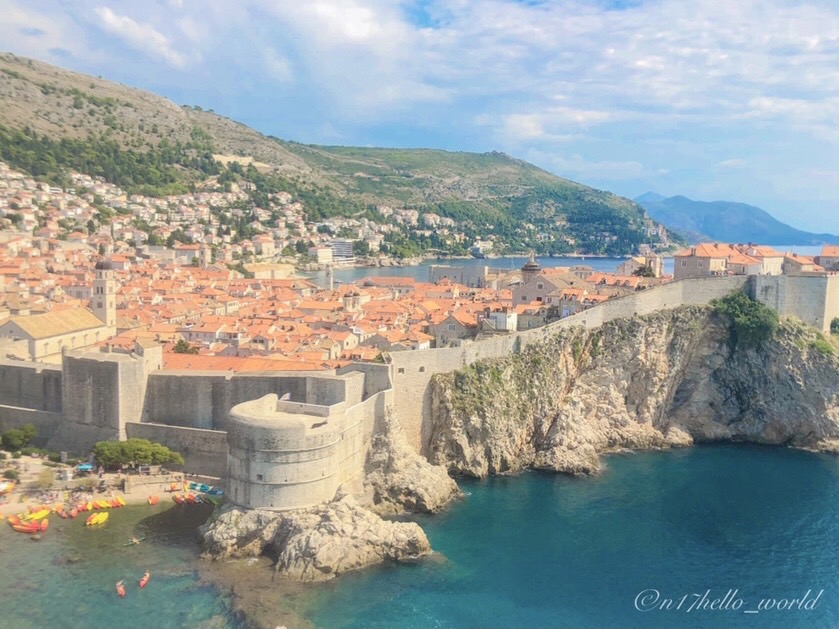
Continuing from Part 1, here is a model itinerary for enjoying Dubrovnik and Mostar with a minimum of five and a half days off.
Day 4 (Monday)
On this day we joined an optional tour booked through HIS, a Japanese travel agency, crossing the border from Dubrovnik into Bosnia and Herzegovina.
A day tour from Dubrovnik crossing the border to visit Mostar and Kravice Falls.
I first learned about Bosnia and Herzegovina through a Japanese picture book called “Give Us Flowers, Not Landmines.” But as a child, I couldn’t connect the idea of “a dangerous place full of buried landmines” with “a beautiful European country with lovely old towns,” and it wasn’t until much later that I learned where Bosnia and Herzegovina actually is and how the conflict unfolded.
Sadly, there are still many areas where landmines remain, but in tourist destinations like Mostar and the capital Sarajevo, the mines have been cleared and the ground paved, so visitors are extremely unlikely to be harmed by them.
7:00 — Depart the hotel for Bosnia and Herzegovina
After breakfast at the hotel, we headed to the hotel entrance, which had been designated as the tour meeting point.
Since I had booked through HIS, I vaguely assumed, “There’ll be plenty of Japanese travelers, so I won’t have to work hard at listening to English, and I can relax about my bags on the bus.” But when we boarded… we were the only Japanese passengers! I listened desperately to the guide’s English so I wouldn’t miss the one thing that mattered: the meeting time after free time! (laughs)
By the way, if you take the shortest route to Mostar, the final destination, you cross the land border three times: Croatia → Bosnia and Herzegovina → Croatia → Bosnia and Herzegovina! And so, my collection of EU entry stamps — until now only planes and trains — gained a new stamp with a car symbol! (Since the UK has passport control, you can get a train-symbol stamp by taking the Eurostar!) Now I just need to collect the remaining ship symbol somewhere ✨
What struck me about the border crossings was that going from Croatia into Bosnia and Herzegovina took almost no time at all, while the crossing from Bosnia and Herzegovina back into Croatia tended to be slow.
When we first entered Bosnia and Herzegovina from Croatia, the bus guide announced, “We’ve just crossed into Bosnia and Herzegovina without any immigration check.” For a moment I wondered, “Wait, is Bosnia and Herzegovina in the Schengen Area…?” It isn’t (as of 2021, Bosnia and Herzegovina is not a member of the Schengen Agreement, which allows border crossings without passport control) — the checks were simply very relaxed. That said, even at the immigration check from Bosnia and Herzegovina into Croatia, the officers collected all the tour passengers’ passports in one batch, so perhaps tourists just aren’t seen as a concern.
10:30 — Kravice Waterfalls
Our first stop in Bosnia and Herzegovina: the Kravice Waterfalls. It was a soothing, peaceful place, but it was raining, and since waterfalls of this height are fairly easy to find in Japan, I did think a tour that allocated more time to Mostar might have been a better choice.
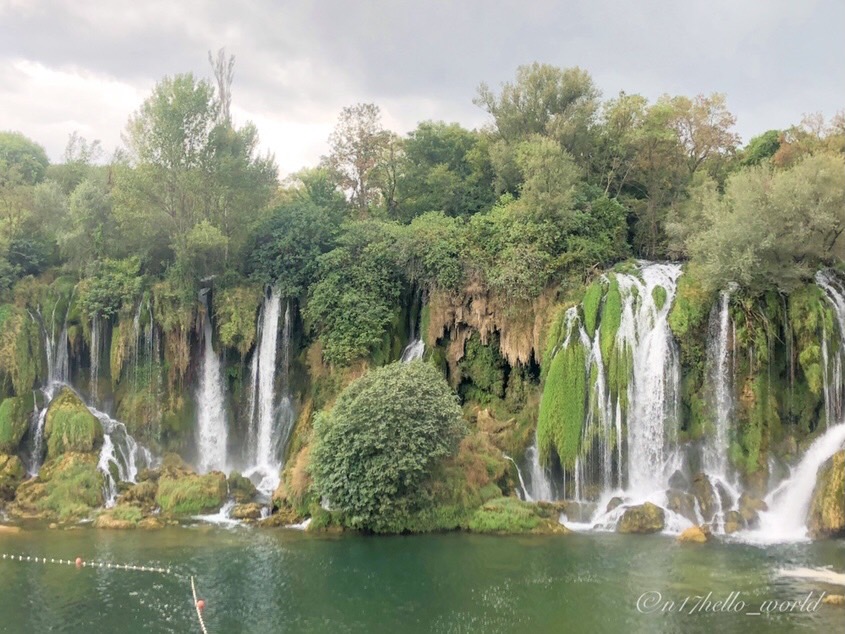
The area near a rest stop along the way is apparently a resort region of Bosnia and Herzegovina, and it felt like time flowed even more slowly there than in Dubrovnik.
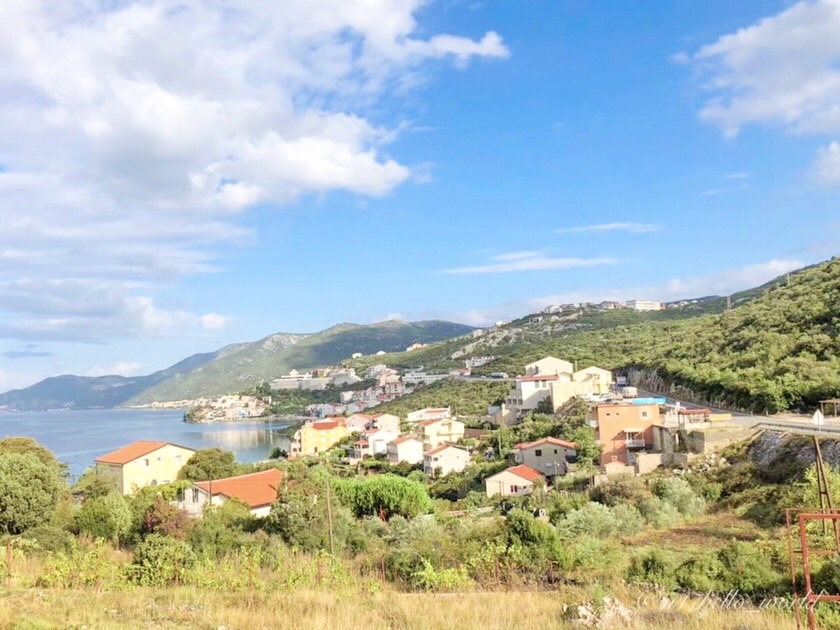
12:30 — Arrival in Mostar
At last, we arrived in Mostar. The first half was a guided walk with explanations from our tour guide, and the second half was free time.
Our guide was someone who had lived through the war until he was six years old. Stopping at an empty lot along the way, he told us: “I know it’s unusual for a guide to explain an empty lot… This is where the synagogue once stood. Before the war, many Jewish people lived in this city, but through persecution they died or fled, and almost none remain. Even after the war ended, they never came back, and in the end the synagogue was never rebuilt.”
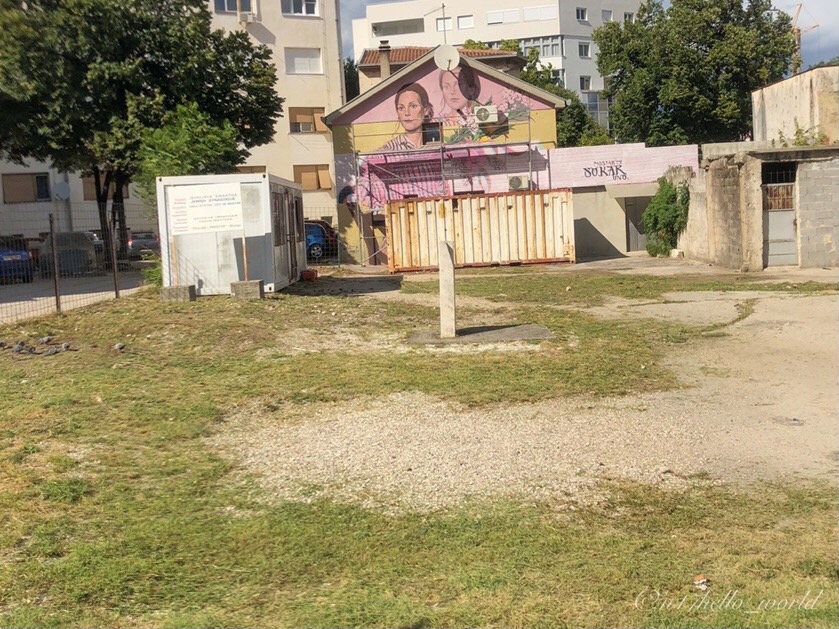
Buildings like this one still remain.
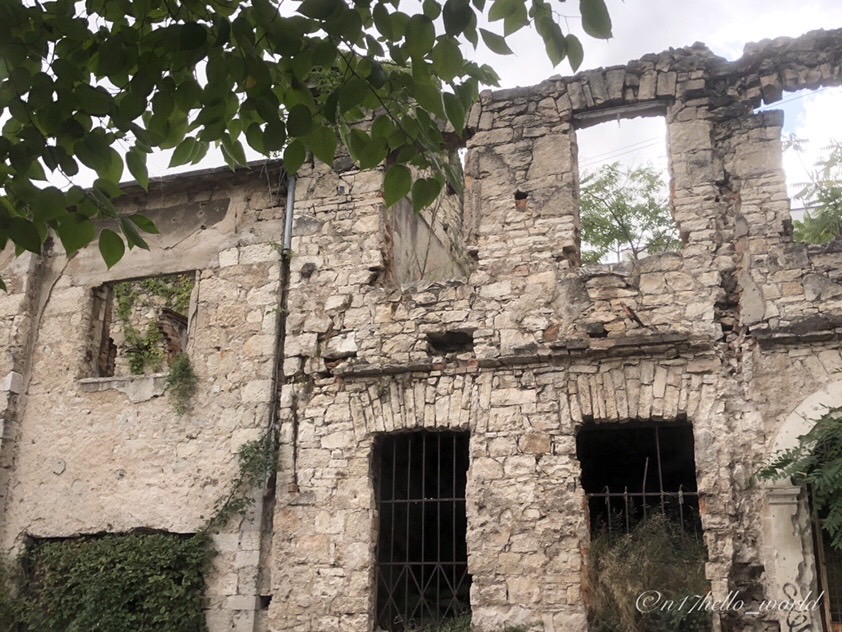
The ruined buildings in central Mostar may be deliberately preserved, but on the way to Mostar we also occasionally spotted destroyed buildings from the bus window.
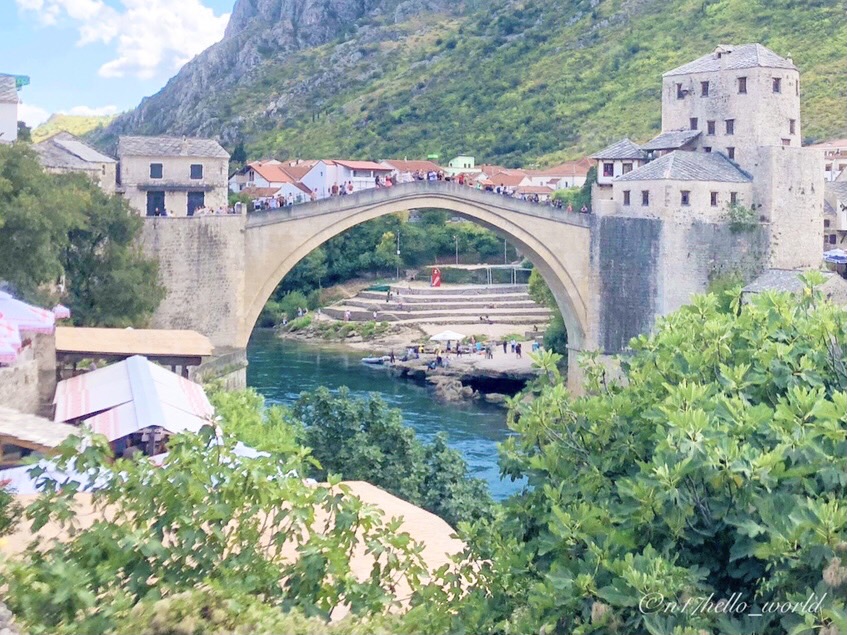
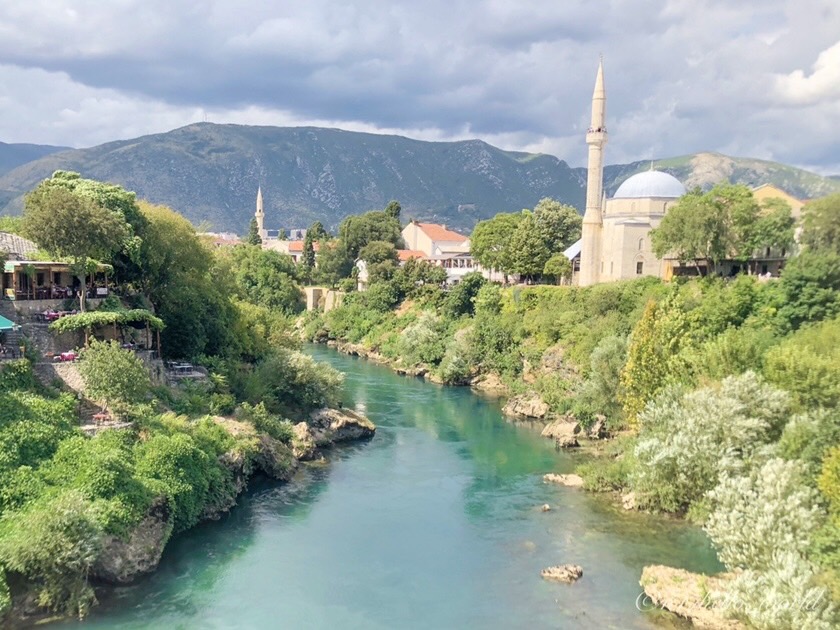
And then, finally, Stari Most came into view. Stari Most means “Old Bridge” — Catholic residents live on the west side of the bridge, and Muslim residents on the east.
The bridge was destroyed in the war and left in ruins for some time, but in 2004 it was rebuilt, partly using fragments recovered from the river, and today it stands as a symbol of peace connecting the residents on both banks.
Stari Most’s famous attraction is diving from the bridge into the river.
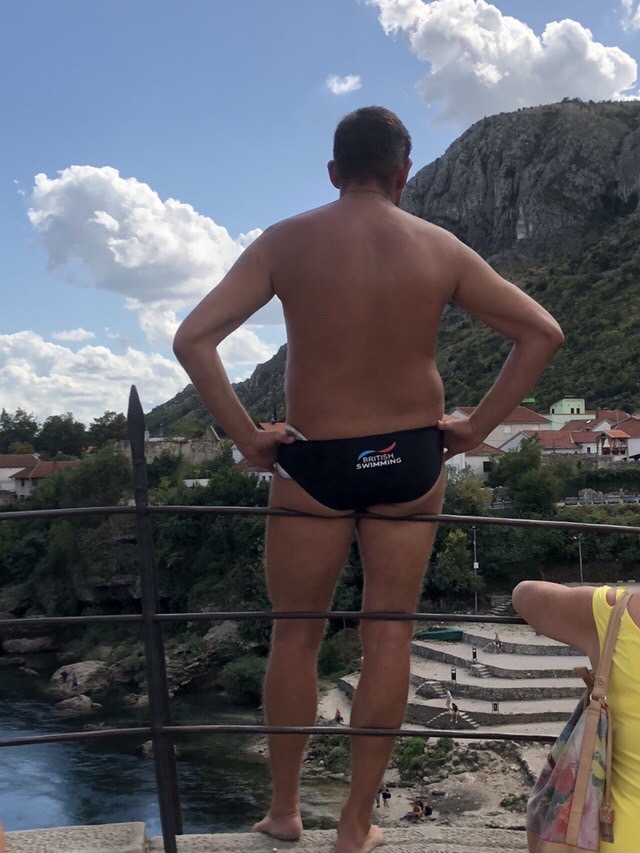
Incredibly, this man will dive from the bridge if tourists pay him 35 euros…! I couldn’t do it even for 35,000 euros…!
Our guide joked, “In the old days, every man had to jump from here in order to get married. Now you just sign a piece of paper. Thank God for that.” (laughs)
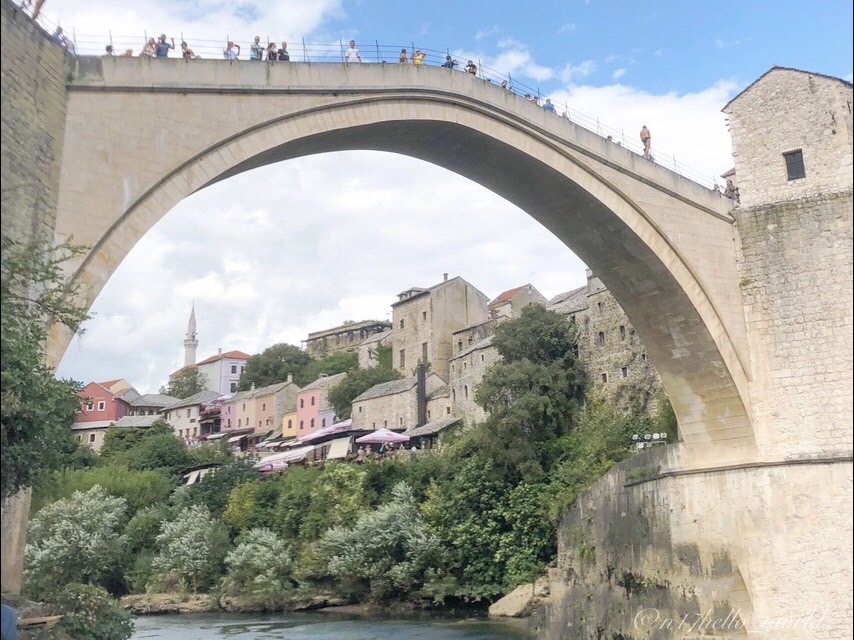
Here’s another photo of Stari Most… just look at that height!
By the way, it’s not just the bridge diver — euros are accepted throughout Mostar’s tourist areas, and you even get your change in euros. It’s convenient, but part of me wishes I had tried using the “convertible mark,” Bosnia and Herzegovina’s own currency. The German mark no longer exists, yet a currency whose very name promises “exchangeable at a fixed rate with the mark” still survives — I find that fascinating.
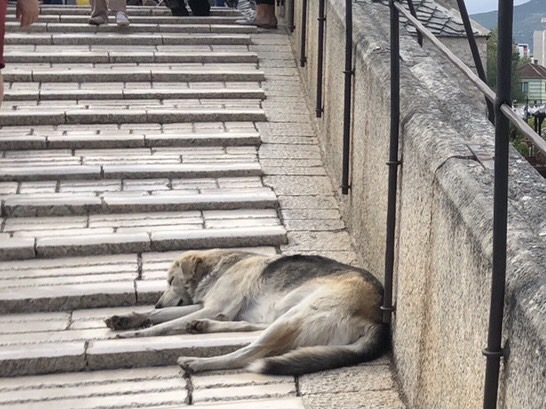
On the bridge, a large stray dog was napping contentedly… (laughs)
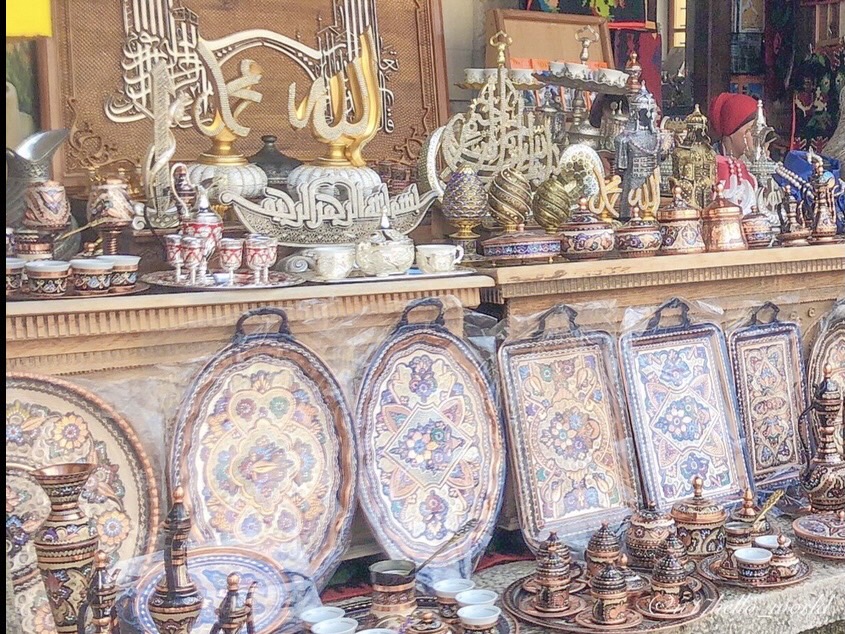
In the souvenir shops on the predominantly Muslim side, goods with an Oriental flair were on sale, and I truly felt how people of different cultures coexist in the same city.
With little time left before the meeting time, we grabbed a quick lunch and set off on the long road back to Dubrovnik.
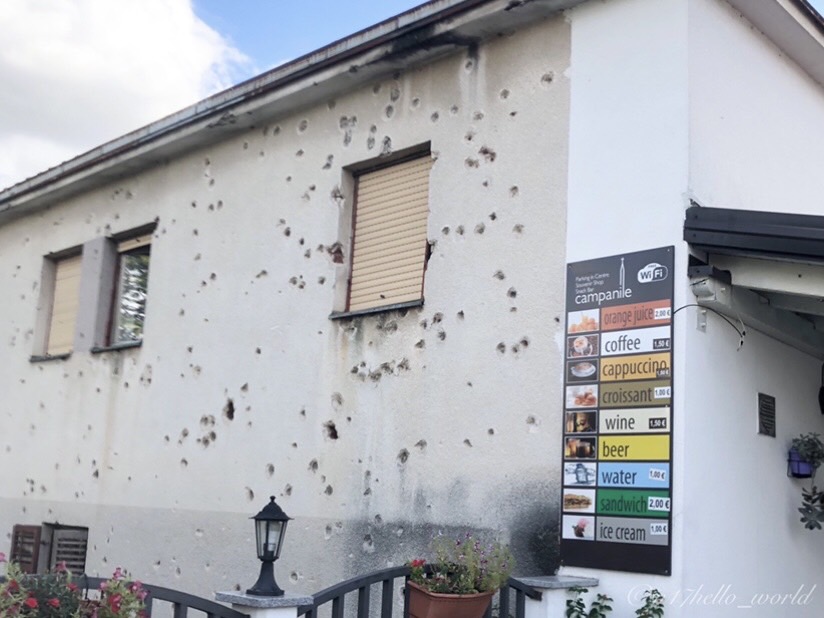
Even the building that served as our tour meeting point was covered in bullet marks.
Along the road, every few minutes of driving brought us past a church or a mosque. Just after thinking, “That building has a minaret and a dome, so it must be a mosque,” we would pass a church with a cross, then a few minutes later another mosque, and so on.
With this many religious buildings, there must be a great number of deeply devout people living here. I couldn’t help wondering how the people of this country live with the memory of a war in which religious differences also played a part.
19:30 — Back at the hotel in Dubrovnik
The border check on the way back took a very long time, and we arrived at the hotel an hour and a half later than planned. Exhausted from the long bus ride, we had a quick dinner at the hotel restaurant and went to bed early.
Day 5 (Tuesday)
On our last sightseeing day, we used the bus ticket included with the Dubrovnik Card to visit Cavtat. It’s spelled “Cavtat” — so hard to read! (laughs)
8:00 — Leave the hotel
After breakfast at the hotel, we headed to the bus stop near the cable car station by Dubrovnik’s old town.
9:00 — Board the bus
When I visited, bus number 10 was the one bound for Cavtat!
9:45 — Arrival in Cavtat
Right after getting off the bus, we picked up a map and brochures at the information office and started exploring.
Compared to Dubrovnik, Cavtat has far fewer tourists, making it the perfect place to slow down and relax.
We strolled along the beautiful sea and lingered at a cafe.
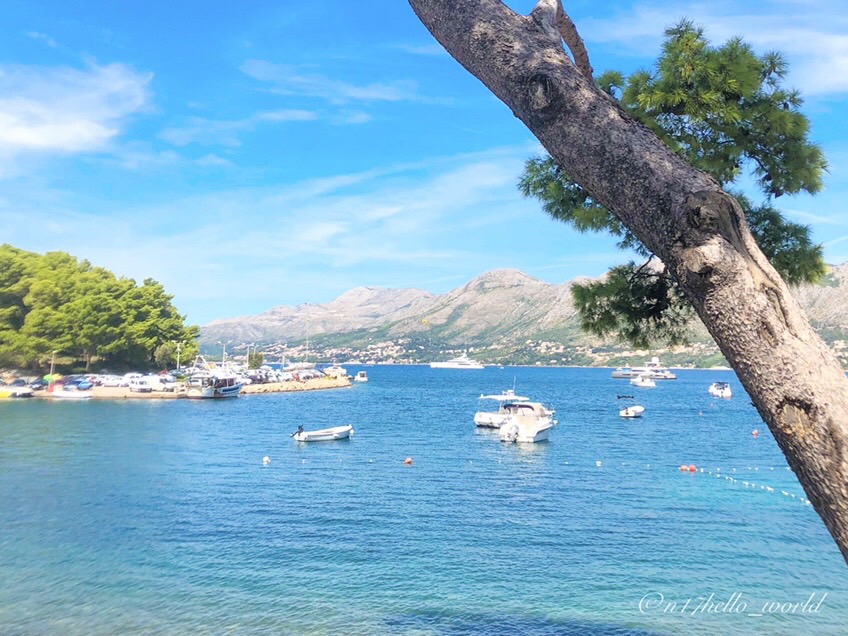
I love famous destinations with all their star attractions, of course, but I think slowly wandering through a quiet European town away from the crowds is also a wonderful way to spend your time.
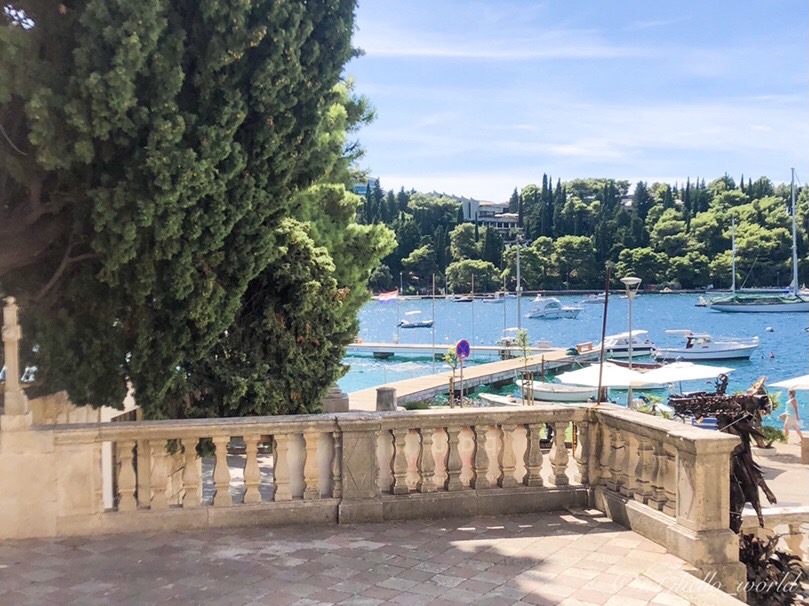
12:00 — Lunch
We had lunch at “konoba KOLONA.” I ordered this tuna pasta.
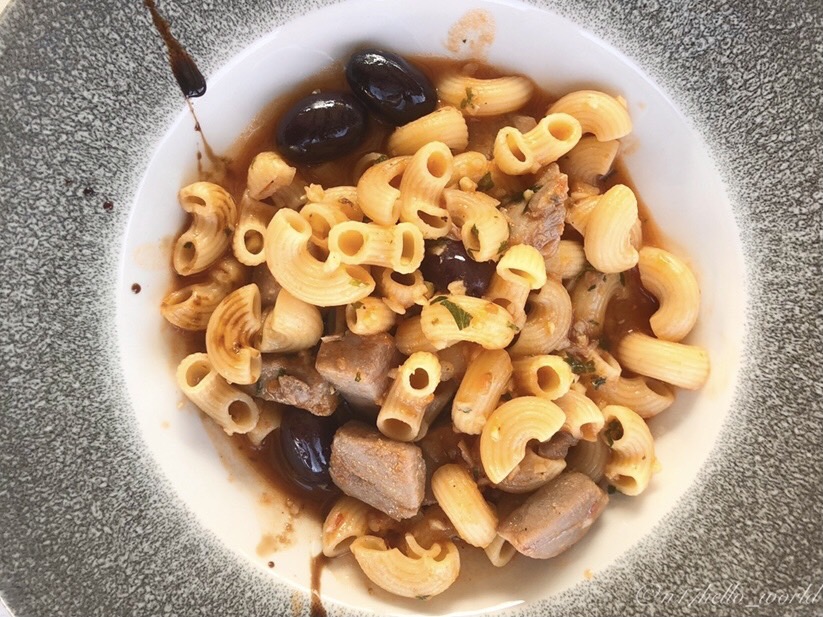
The food was delicious, but even better was the terrace seating, where we could feel the fresh breeze on a European street corner.
14:00 — Back to Dubrovnik
After lunch we explored the area a little more, then boarded the bus back to Dubrovnik.
15:00 — Arrival in Dubrovnik
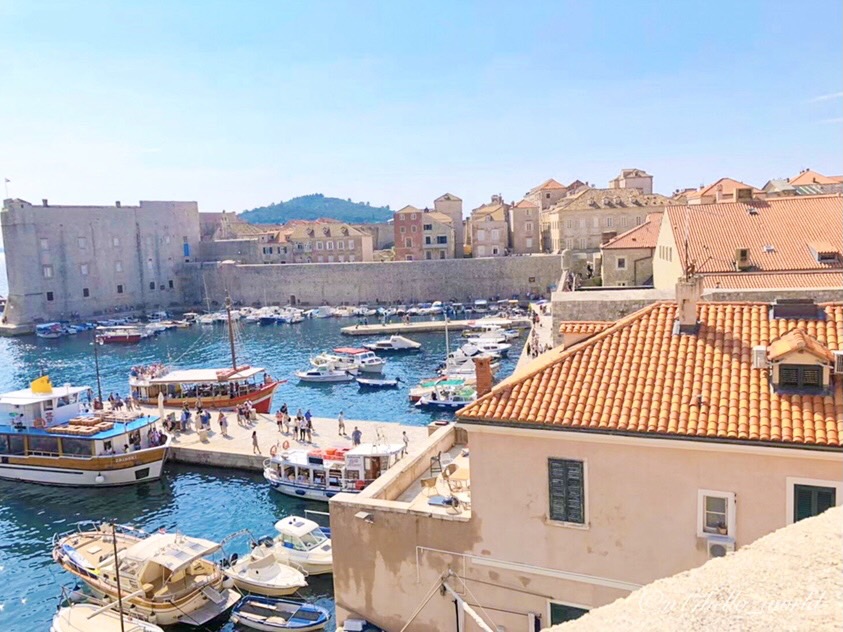
Since we would be transferred directly from the hotel to the airport the next day, this was our last look at the old town.
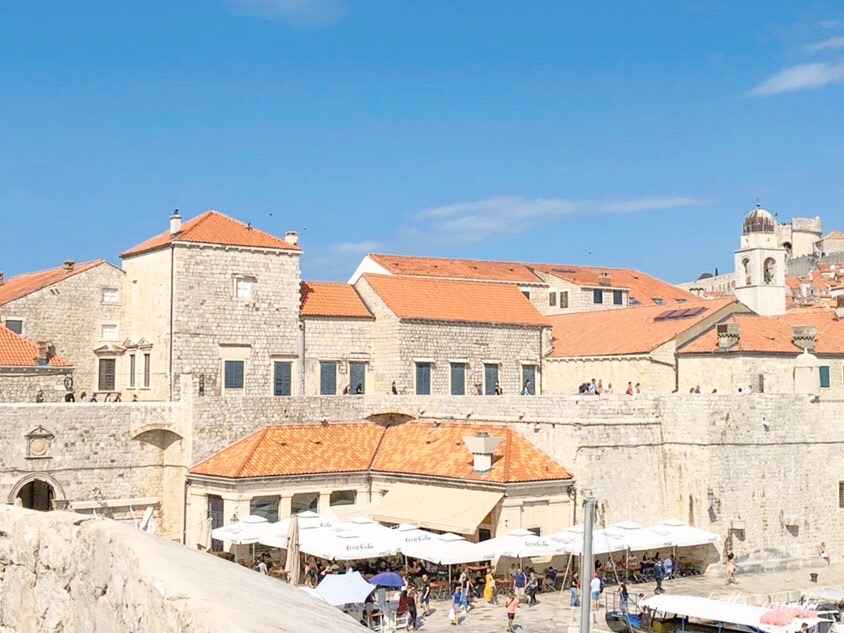
We spent the time visiting museums whose tickets were included with the Dubrovnik Card and shopping for souvenirs.
19:00 — Back to the Lapad district for dinner
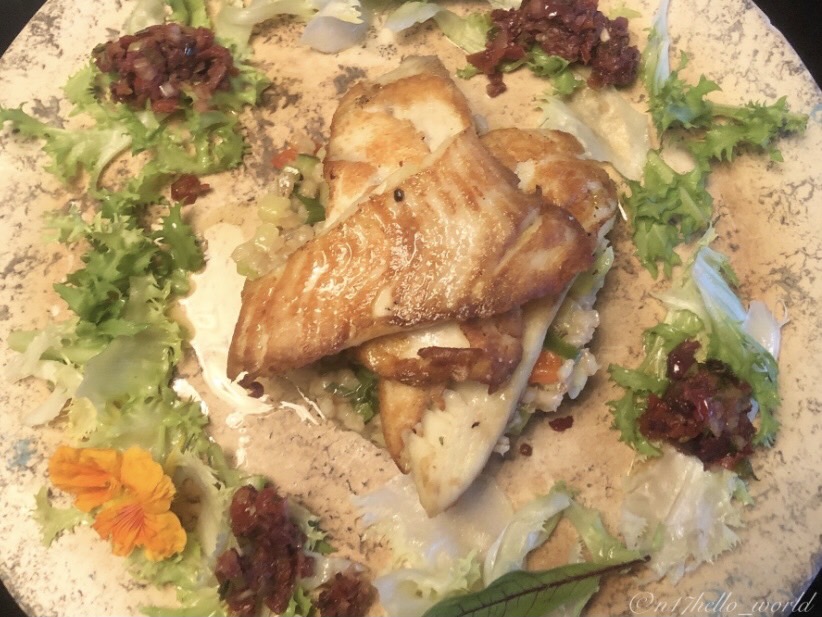
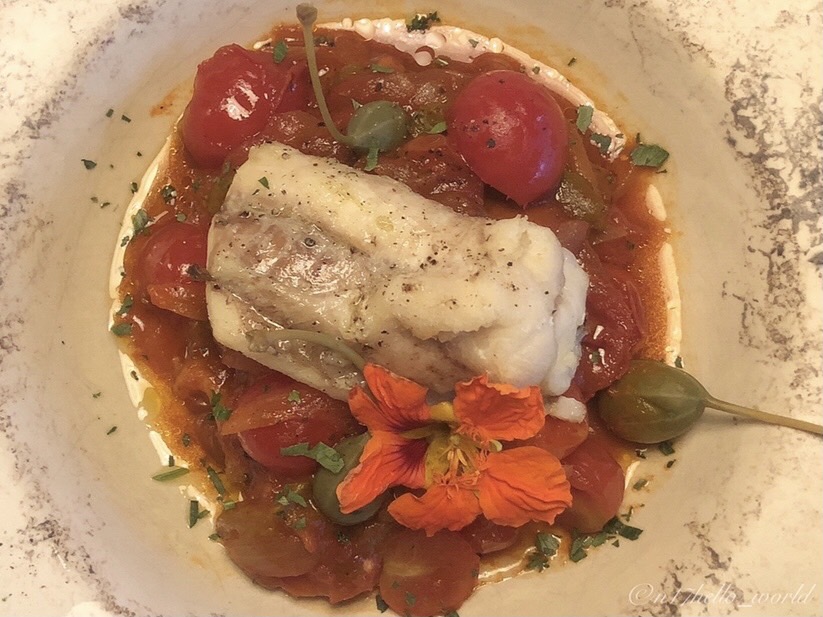
We finally made it to Pantarul, the restaurant that had been fully booked on our first night.
True to its popularity, the food was excellent — not only delicious but beautifully presented, making for a thoroughly satisfying dinner.
Once again, I was reminded how important it is to book a good restaurant in advance.
20:30 — Packing at the hotel
After dinner, we returned to the hotel and packed our bags.
Day 6 (Wednesday)
7:00 — To the airport
After breakfast at the hotel, we headed to the airport.
From Dubrovnik we flew to Helsinki, then connected onward to Haneda Airport in Tokyo.
Day 7 (Thursday)
9:00 — Arrival at Haneda
Because of the time difference, we arrived in Japan the following day. With smarter flight connections, you might be able to get home a little earlier.
Someday I’d love to visit the capitals we missed on this trip, like Zagreb and Sarajevo — and next time, with my camera in hand!